

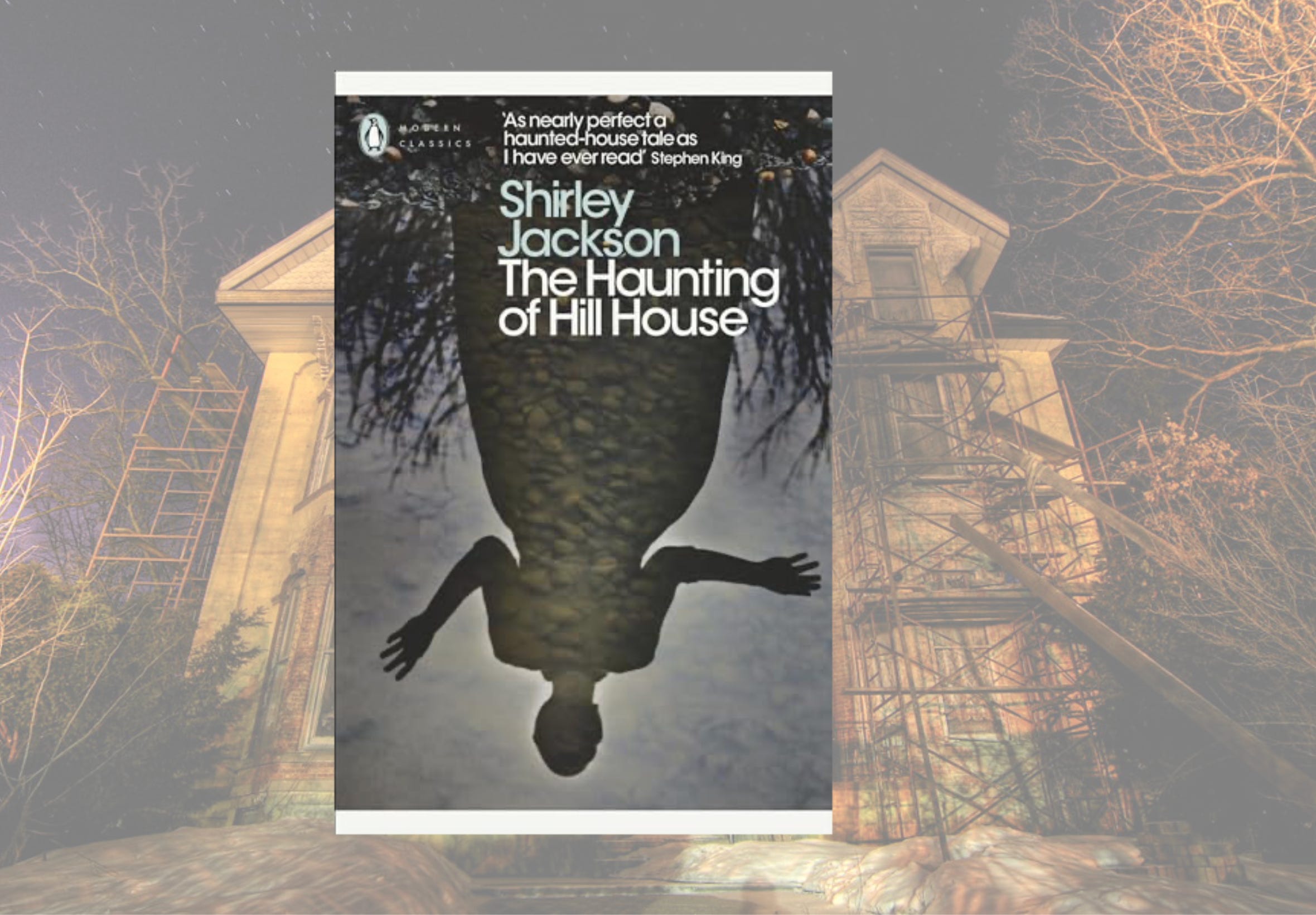
It is worth starting this in-depth review by saying that I did not really like this book; it was only a two-star read for me. My main problem was that none of the characters was engaging. They were all quite unlikeable, but the more I think about it, the more I suspect this might have been the point.
Shirley Jackson wrote The Haunting of Hill House in 1959. It is less a monster story and more a psychological thriller, an exploration into the psyche of one woman, Eleanor Vance. Throughout the narrative, you are left asking one central question: was the house actually haunted, or is this simply the story of a woman’s psychotic break?
Chapter 1: The Invitation and the Journey
The book starts well. The opening sentence is one of the best I have ever read for introducing a story.
These opening paragraphs are some of the most famous in literature, establishing Hill House as an entity in its own right. We also meet Dr John Montague, an investigator of the supernatural who invites people with psychic histories to stay.
Here, we meet our protagonist, Eleanor Vance. We learn she has spent eleven years caring for her mother, a fact that sets the scene for her psychological state. Her journey to the house is an act of rebellion; she steals her sister’s car and drives there alone.
As Eleanor approaches, the house is described as ‘vile’ and ‘diseased’. Jackson uses architectural descriptions to create a sense of wrongness. The house is built with slight angles that are “off”, leading to a feeling of constant disorientation. Having read The Lottery last year, I realise that Jackson drops hints regarding the finale early on. This becomes clear as we follow Eleanor’s journey into insanity.
Chapter 2: The Arrivals
As the rest of the characters arrive, you realise Eleanor is not the only one with a weak relationship with reality. Theodora strikes you as slightly unhinged and self-absorbed. We also meet the caretakers, the Dudleys, who are as strange and menacing as the house itself. By this stage, the house has become as much of a character as the human inhabitants.
The book illustrates the quick, artificial bond the inhabitants establish over dinner. While you might initially attribute this to nervousness, by the end of the book, I believe this further establishes the fragile mental state of the entire group.
Chapter 3: Exploration and the Red Room
As the story continues, it becomes apparent that none of the guests is stable, not even the good doctor. The house begins its psychological work immediately. Despite a sense of intense isolation, the characters explore the labyrinthine layout, discovering the library (which Eleanor refuses to enter due to the smell of decay) and the nursery.
Doors shut on their own accord, further disorientating the inhabitants. They find a cold spot near the nursery, which adds weight to the doctor’s tales of the young girls who originally grew up in Hill House.
Hill House looks like a home but functions like a trap. Eleanor begins to lie about her life, creating a fictional apartment and identity to impress Theodora. Her internal dialogue constantly forces you to question her sanity.
Chapter 4: The First Manifestation
Jackson portrays human psychology beautifully in this chapter. She notes that the inhabitants all sit in the same seats for dinner. This made me smile; having taught many classes, I know that students always sit in the same seats every week. One new student sitting in someone else’s chair can throw the whole group off.
We also hear more from Mrs Dudley. She states repeatedly that she must return the plates to the shelves at a specific time, almost as if the house has trained her.
The haunting truly begins. During the night, Eleanor and Theodora are terrified by a booming sound hitting the doors in the hallway. Because Theodora is there to witness it, you are led to believe this is a real phenomenon rather than a figment of Eleanor’s mind.
The next morning, they find “HELP ELEANOR COME HOME” scrawled in chalk on the hallway wall. The house has singled Eleanor out, or has it? The group’s reaction, accusing Eleanor of writing it herself, highlights the growing tension and her increasing fragility. We never truly find out if she was responsible.
Chapter 5: The Blood and the Conflict
The chapter starts with the realisation that Eleanor is actually enjoying her time in Hill House. Whether this is due to her mental state or the novelty of having friends is not fully explored, but she seems to have accepted the house as a friend. She states: “I can remember knowing that I was frightened, but I can’t imagine actually being frightened—”
The doctor also begins to enjoy the atmosphere. He describes it as intoxicating, if not dangerous. The group begins acting like children, completely devoid of adult responsibility.
Chapter 6: The Final Night
This chapter provided the only moment that seriously sent chills up my spine. Eleanor holds the hand of someone she thinks is Theodora in the dark, only to find out later that it wasn’t her. We never learn whose hand she was holding.
The book suggests this escalation of supernatural events is linked to Eleanor’s psychic history, as we learned earlier of a similar incident in her childhood. It shows that Eleanor has stopped fighting the house; she has become part of it, claiming she can hear its heartbeat.
Chapter 7: The Planchette and Mrs Montague
After the previous chapter, I was hoping for more spine-chilling moments, but the book takes a strange turn. The pace slows to a crawl with the arrival of the doctor’s wife, Mrs Montague, and her friend Arthur.
The only reason for this chapter, as far as I can surmise, is that Mrs Montague serves as a caricature of a spiritualist. She misses the actual horror of the house because she is looking for “spirits” and “love,” while the house is actually full of malice. However, the planchette spells Eleanor’s name several times, suggesting a psychic link rather than a simple descent into madness.
Chapter 8: The Descent into Madness
This chapter clearly depicts Eleanor’s breakdown. We find that one catalyst may be her guilt over her mother’s death: “She knocked on the wall and called me and called me and I never woke up. I ought to have brought her the medicine; I always did before. But this time she called me and I never woke up.”
By this point, the repetition of the line “Journey’s end in lovers meeting” had almost driven me insane as well. The chapter ends with Eleanor sneaking out at night, experiencing hallucinations as she follows her mother’s ghost to the top of a staircase. The rescue by Luke marks the moment the group realises Eleanor has lost her sanity. The house has completely consumed her.
Chapter 9: The Final Departure
In the final chapter, the group decides Eleanor must leave for her own safety. She packs her bags and is forced into her car. Eleanor suddenly realises that if she leaves, she has nowhere to go; she has no home of her own.
To ensure she stays at Hill House forever, she accelerates and drives her car into the great horse-chestnut tree. In her final moment of consciousness, she wonders, “Why am I doing this?”
The novel ends with a repetition of the famous first paragraph: “Hill House, not sane, stood by itself against its hills... and whatever walked there, walked alone.”
The ending is the tragedy of a woman who sought a home and only found one in death. The book’s greatest trick is that you never truly know if the house was haunted or if Eleanor was simply having a psychotic break.
What did you think of The Haunting of Hill House?
Until next Friday: Read to learn. Read to escape. Read to smile.