

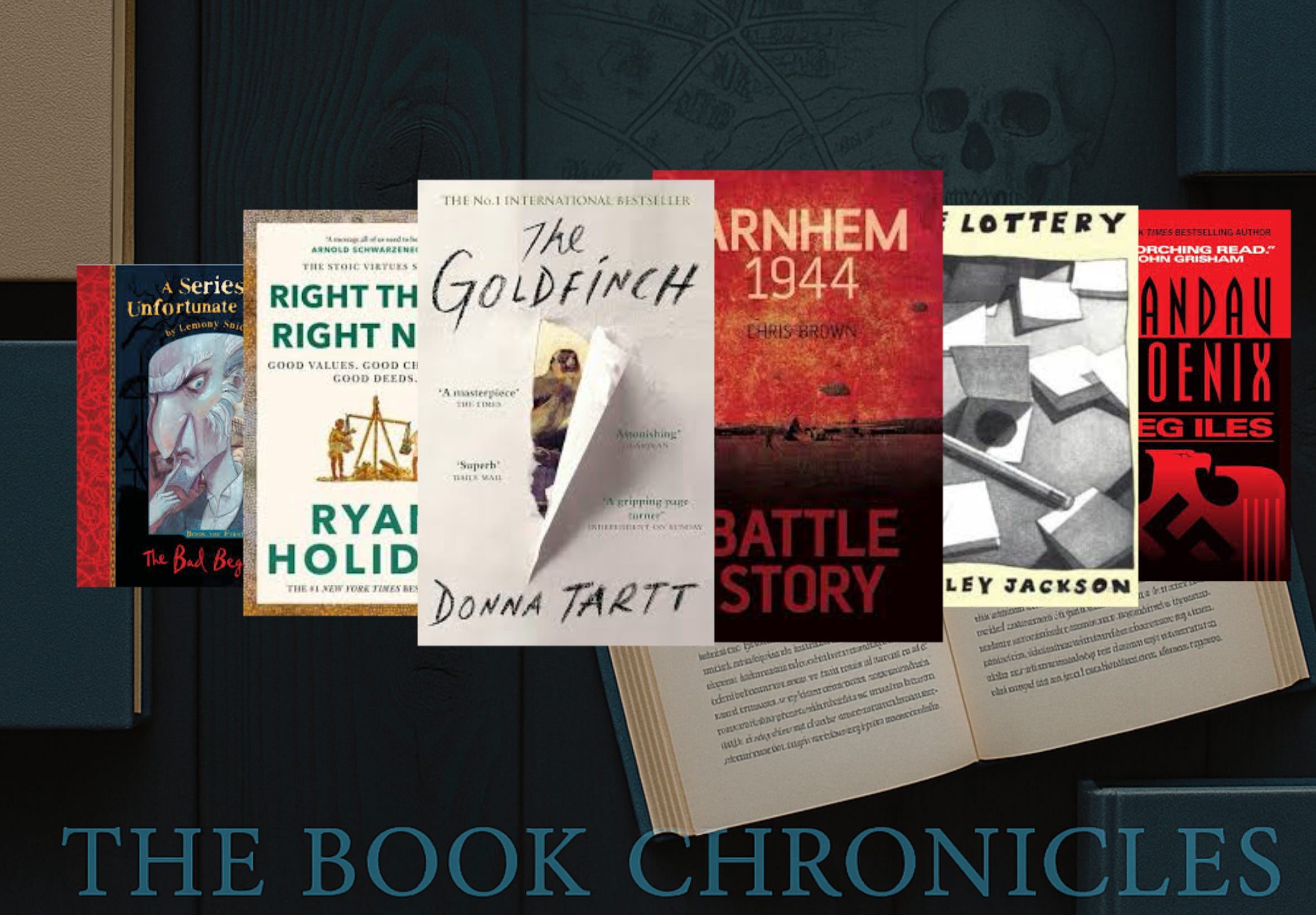
If you read a book, it’s a good reading month, that is how I am starting my round-ups from now on. No one needs to feel the pressure of reading goals and book counts, especially if they want to enjoy their reading.
Spandau Phoenix ⭐️ ⭐️ ⭐️
The Spandau Phoenix plunges the reader headlong into a complex post-war conspiracy right from the start. The book delivers on its promise of a good, fast plot; the pacing is relentless.
The narrative is a mixed bag when it comes to the people driving the action. One of the characters I did not like at all. In all honesty, all the way through I was hoping he would be dispatched.
However, the other character with him drives the action and is likeable enough to keep you turning pages. This lack of dimension prevents the novel from reaching its full potential.
The fusion of history and suspense is what keeps the engine running. The book features compelling historical aspects, especially relating to the Nazi regime and its aftermath, giving the narrative a weighty backdrop.
That said, as with any historical thriller, how accurate they are remains to be seen; it is best to enjoy these elements for the fiction that they are.
Overall, The Spandau Phoenix is a highly entertaining journey into dark history and espionage. It’s a compelling, propulsive ride that overcomes its character weaknesses through sheer narrative drive.
The Goldfinch - Donna Tartt ⭐️ ⭐️ ⭐️ ⭐️ ⭐️
Donna Tartt’s Pulitzer Prize-winning novel, The Goldfinch, is a massive, Dickensian work that is less about a painting and more about the devastating emotional fallout of a single, catastrophic moment. Readers familiar with Tartt’s first novel, The Secret History, will find The Goldfinch to be a completely different experience in terms of plot and tone.
The story begins in trauma when thirteen-year-old Theo Decker survives a bombing at a New York art museum that kills his mother. In the chaos, Theo instinctively takes a small, priceless Dutch Masterwork painting, Fabritius’s The Goldfinch, which he secretly keeps as he navigates a rudderless adolescence.
This is, undeniably, a dark book with dark themes. Tartt never shies away from depicting the long, corrosive shadow of trauma. The novel deeply explores PTSD and the profound isolation that stems from childhood trauma.
As Theo grows up, we witness his journey through neglect, abuse, and the spiralling self-medication that leads to heavy drug use. There are moments so heavy, so detailed on overwhelming despair, that they genuinely have you putting it down to take a break at times.
Yet, despite the darkness within the book, the experience is ultimately redemptive. By the time you reach the masterful conclusion, you surprisingly walk away with hope, recognising that you have just finished a brilliant book. It is a sprawling tale of beauty, memory, and the powerful, stubborn urge to survive.
Although different from her other works, it still bears Tartt’s unmistakable stamp: beautiful prose that is both literary and accessible, and an in-depth narrative that is utterly immersive. Now all I have to do is wait for her to write another book.
The Lottery - Shirley Jackson ⭐️ ⭐️ ⭐️ ⭐️ ⭐️
On a warm summer day, the residents of a small, seemingly ordinary village gather in the town square for their annual tradition: the lottery. The process is organised, well-attended, and treated with ritualistic seriousness by the townsfolk. The story chronicles the assembly, the drawing of the slips, and the ultimate climax of the yearly event.
I was drawn to this story, having heard it was the inspiration for parts of The Hunger Games. Reading it, it is pretty obvious which part it is, but Jackson executes the horrific concept in a chilling way that few writers can match.
The sheer power of the piece lies in its quiet unveiling. The atmosphere starts innocuously, children collecting stones, neighbours chatting, before the routine, generation-spanning tradition is revealed to be horrific and brilliant in equal measure.
The horror is entirely derived from the story’s masterful tone, which contrasts banal small-town pleasantries with an unspeakable final act.
Jackson is a genius, weaving so much story into so few pages. Every detail, from the chipped black box to the casual demeanour of the participants, is loaded with meaning about blind adherence to tradition, the cruelty of conformity, and the darkness that can lurk just beneath the surface of civilised society.
Right Thing, Right Now - Ryan Holiday ⭐️ ⭐️ ⭐️
Ryan Holiday’s Right Thing, Right Now is not merely a book you read; it is a necessary, sometimes uncomfortable, challenge to your conscience, reminding you that life is defined not by intentions, but by immediate action.
This incredibly informative book is packed with stories that engage, pulling vivid examples from history and philosophy that give you lots to think about and an irresistible urge to look into more. Its true power is emotional: it forces you to confront your own accountability and past failures, but then quickly ignites a powerful surge of motivation by showcasing heroic figures.
Ultimately, the book delivers the profound Stoic lesson that the way out of anxiety is simply to do the right thing, right now, leaving you with a clear, empowered sense of purpose. Right Thing, Right Now is a brilliant and urgent read.
A Series of Unfortunate Events, The Bad Beginning - Lemony Snicket ⭐️ ⭐️
The Bad Beginning is a contemporary classic that I read with my daughter, but the experience was surprisingly uneasy.
The core of the discomfort is not Count Olaf’s villainy, but the pervasive, systemic apathy of every adult the Baudelaire children encounter. The emotional core is the agonising sense of injustice. As an adult, you are forced to watch powerlessly as well-meaning, utterly useless guardians fail to see the obvious danger.
This makes the adults the biggest antagonists, as their refusal to believe the children feels like a deep violation of trust. I wonder, if I was too old to read it, which is why I didn’t like it. I did enjoy aspects of it, but I could not get over some of the themes and topics that were discussed which were simply child abuse. Maybe, it is a book that has not survived the test of time.
Arnhem 1944 - Chris Brown ⭐️ ⭐️ ⭐️ ⭐️ ⭐️
Some of you may be aware that my obsession with Market Garden, otherwise known as the battle for Arnhem in World War II, comes from the fact that my Grandfather fought there. He was one of the few soldiers who came back from the campaign, and it was an event in his life he never told anyone about.
This book is especially well researched and allowed me to follow his steps over the eight days of hell he endured. It was a book that I had to put down on several occasions, considering the horror these men went through.
If you are interested in World War II and one of the battles that did not succeed and the reasons behind the failure, then I would strongly suggest picking this up. It is a short book but packed with research and first-hand accounts.
So, these are my six books for November—a mixed bunch, but one of my favourite reading months, if I’m being honest.
Tell me in the comments what your favourite book of November is.
Until next Friday: Read to learn. Read to escape. Read to smile.