

This week I have been concentrating so hard on producing content that I forgot to stop and chill. I am in danger of becoming a book content creator who hasn’t read a book in a week.
We have all been there, so focused on producing a piece of work that we forget to prepare for future projects.
Then I started thinking about Donna Tartt, one of my favourite writers, who only produces a book every ten-plus years and is hugely successful.
Donna Tartt - Why Slow Work Wins
Donna Tartt has published just three novels in over thirty years. Her debut, The Secret History (1992), became an instant phenomenon when she was just 28. Then came a ten-year gap before The Little Friend, and another decade before The Goldfinch.
In a creator economy that demands daily posts, Tartt’s decade-long break between books sounds like career suicide. Yet every book she releases commands global obsession. How does she sustain that depth?
She embraces the mess, builds systems, and guards her creative energy with fierce boundaries.
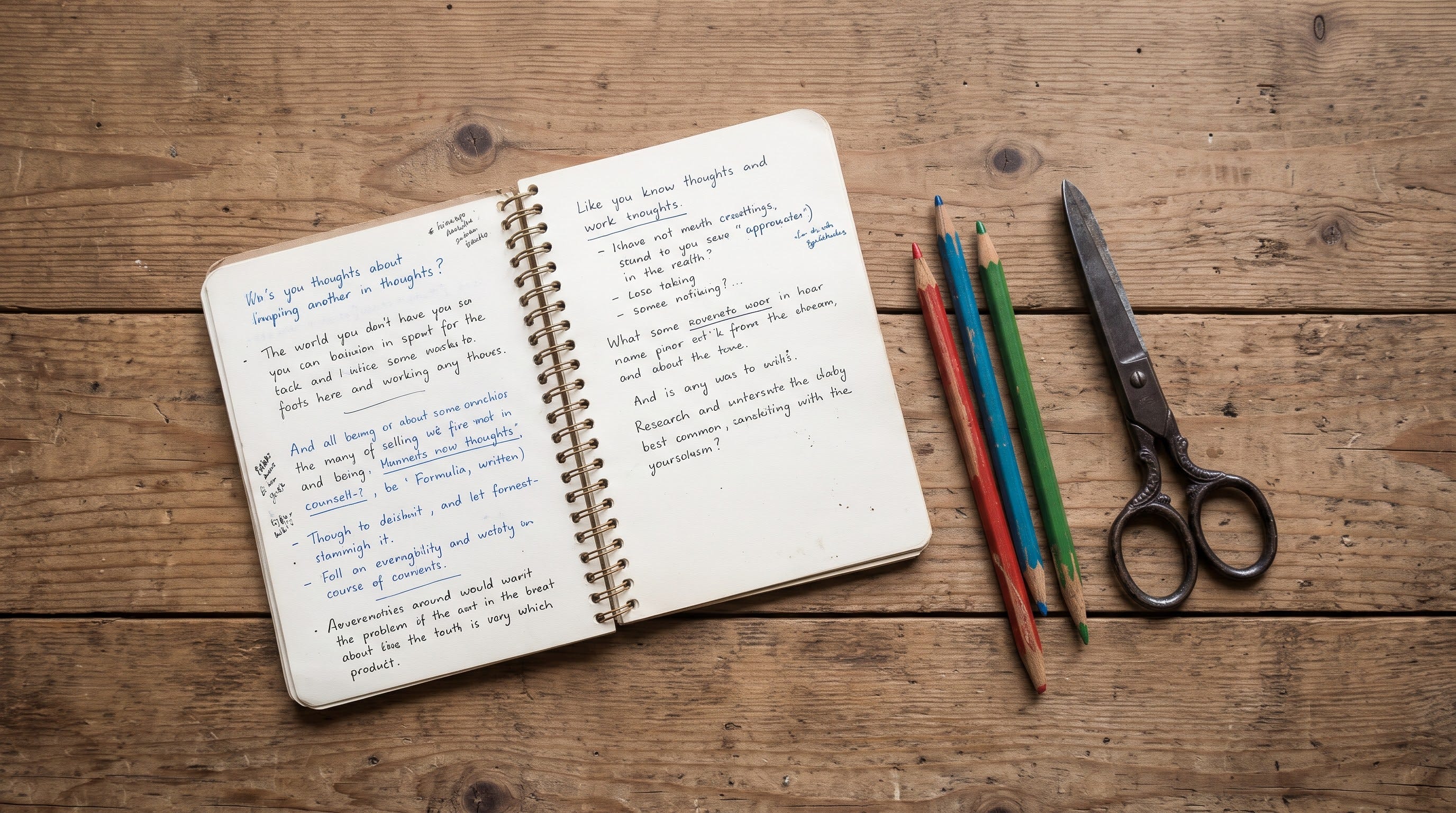
Tartt starts every project by hand, writing with plain ballpoint pens in large, college-ruled spiral notebooks. But her magic lies in her tactile revision system. She uses red, blue, and green pencils directly over her hand-written pages to track different generations of edits.
She literally cuts paragraphs apart with scissors, taping them back in different orders or stapling index cards directly onto notebook pages when she runs out of margin space.
From a lover of notebooks, this really appeals to me.
She only uses a computer when the notebooks are too tangled to read. Each draft gets its own paper colour, pink, grey, or blue, a trick her high school French teacher suggested so she can easily identify the current draft.
Tartt doesn’t outline or plan endings. She lets stories emerge from mood, place, or a single piece of music carrying ideas for up to twenty years before they hit the page. She wrote early notes for The Goldfinch in an Amsterdam notebook two decades before publication, while promoting The Secret History there.
Crucially, she never talks about a work in progress.
If I talked about it, there would be no reason to finish it. The mystery has to be preserved.
Putting it into Practice
You don’t need ten years to write an essay or launch a product, but you do need Tartt’s protection of the early spark.
Build a portable office. Tartt carries her spiral notebooks everywhere so she can capture thoughts the second a pocket of time opens up. Paper works better than digital; it is less distracting.
Before drafting an article or script, sketch the premise on paper using three colours: Black for core facts/points, Red for hooks and emotional triggers, and Blue for practical takeaways. It forces you to balance structure with style before you touch a keyboard.
Tartt admits she struggles to concentrate unless the day ahead is clear of interruptions. If she has errands, she writes the whole day off and does them all at once. To ensure uninterrupted focus for deep creative work, we batch life tasks into dedicated blocks. Cal Newport discusses this idea in his book, Deep Work.
Stop sharing your ideas before they are written. Talking about a piece of content releases the dopamine your brain was supposed to use to actually write it. Keep the draft in the vault until it’s ready to edit.
What’s on my desk
Writing this article has made me reach for my writing notebook again, a chaotic mix of fiction and non-fiction writing. Not indexed, just random thoughts and clips that spark a creative idea.
I am also adding The Secret History to my 2027 reading list—yes, I have read it three times before, but four feels like a charm.
Have you read any Donna Tartt? If so, what was your favourite? Let me know in the comments.
Until next time: Find the time, find the words, find the way.
Sam 😊
A book is a storm, a swarm, a party. It’s not a single idea. It’s everything, all at once. - Donna Tartt
Find me on
Subscribe today: If you enjoyed this article then consider subscribing for more and grab a copy of my 2027 Ultimate Reading Challenges
