

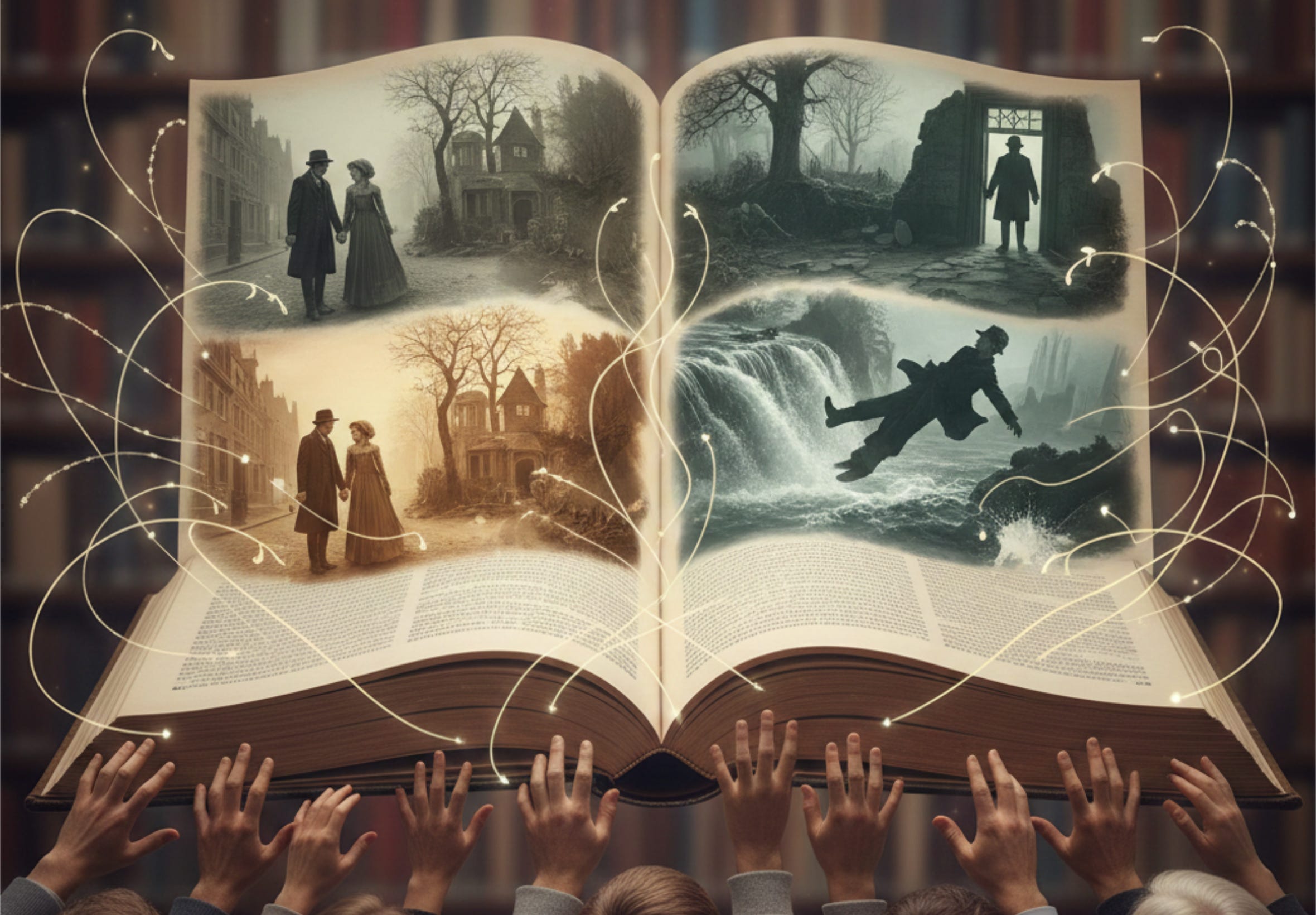
Readers have power; whether you are a writer or a reader, you will understand this concept. As readers, we possess the influence to make a book a bestseller or to condemn it to the back pages of Amazon.
When we read, we each interpret the story slightly differently depending on our life experiences and personalities. However, these two stories from history demonstrate that we also have the power to change the narrative for others.
Great Expectations
Charles Dickens’s Great Expectations remains a beautiful tale of unrequited love and personal growth. However, the resolution of the relationship between Pip and Estella became the subject of intense debate.
When Dickens first penned the conclusion in 1861, he stayed true to the novel’s darker themes of trauma and the permanent scars of the past. In this original version, Pip and Estella encounter each other briefly on a London street many years later. Estella has been widowed and remarried, while Pip remains single. They exchange a few words, and that is it. It was a realistic, albeit sombre, ending that suggested some wounds do not heal.
As the story was being published in serial form in Dickens’s weekly periodical, All the Year Round, the public’s investment in Pip’s happiness was palpable. Readers desperately wanted a “happily ever after” for the protagonist they had watched grow from a terrified orphan into a humbled gentleman.
Before the final chapters were published in book form, Dickens showed the manuscript to his friend and fellow novelist, Edward Bulwer-Lytton. Bulwer-Lytton argued that the public would find the original ending too distressing. Dickens, ever sensitive to his audience’s desires and his own commercial success, decided to change it.
I have no doubt the change will be available for the story... I have put as much as I could into the change of the girl, to make it realistic. — Charles Dickens
The revised version is commonly found in modern editions. In this ending, Pip and Estella meet one last time at the ruins of Satis House. The tone is elegiac but hopeful. As they walk out of the garden together, the novel famously concludes: “I saw no shadow of another parting from her.”
While not an explicit wedding announcement, it provided the emotional closure that Victorian audiences craved. It suggested that their shared suffering had finally made a partnership possible.
Sherlock Holmes
Sir Arthur Conan Doyle’s relationship with his most famous creation, Sherlock Holmes, was not always positive. While readers viewed Holmes as a hero, Doyle eventually came to see the detective as a burden that stifled his other ambitions.
By 1893, Doyle was exhausted. He felt that Holmes’s cold, analytical nature was preventing him from focusing on his historical novels, which he considered his true legacy. To free himself, he wrote The Final Problem, published in The Strand Magazine.
In a dramatic showdown, Holmes and his nemesis, Professor Moriarty, supposedly fell to their deaths at the Reichenbach Falls in Switzerland. Doyle famously wrote in his diary at the time, “Killed Holmes.”
The public reaction was unprecedented. More than 20,000 people cancelled their subscriptions to The Strand in protest. Legends grew of young men wearing black mourning bands on their hats in London. For nearly a decade, during what fans call “The Great Hiatus,” Doyle resisted the pressure to bring the detective back, even as he wrote other works like The Lost World.
Despite his desire for freedom, the character proved impossible to escape. The demand was so high, and the financial offers so lucrative, that Doyle eventually relented. He first teased the public with The Hound of the Baskervilles (set before Holmes’s death), but eventually brought him back to life “officially” in the 1903 story, The Adventure of the Empty House.
Doyle invented a clever explanation involving “Baritsu” (a fictional Japanese martial art) to explain how Holmes survived the fall while Moriarty perished.
Much like Great Expectations, the Holmes canon now exists as two different stories; readers decide their preference.
So, which novel would you change if you could? Would you bring Sirius Black back to look after Harry? Would Gatsby survive the shooting, or would Romeo and Juliet live a long, happy life with many children?
Until next Friday: Read to learn. Read to escape. Read to smile.